
Design Plus Kitchens
Choosing a kitchen counter: what to weigh
How counter options differ in daily use, what each one asks of you, and the questions to ask before you choose one.
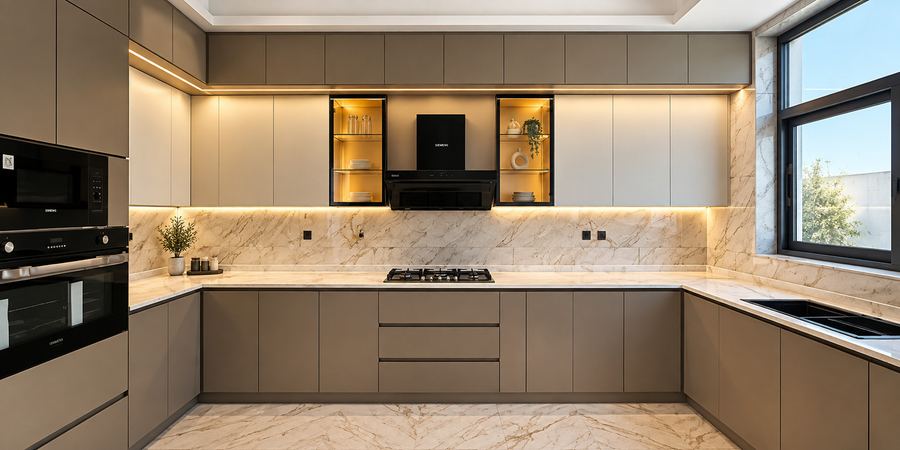
The counter is the surface you touch most and the one line in the quote most likely to surprise you. It is also the decision hardest to reverse, because changing it later means lifting it off cabinets built to carry it.
Ask how it behaves, not how it looks
Every option photographs well. What separates them is daily behaviour: whether a spilled lemon or a hot pot leaves a mark, whether a scratch shows, whether it needs anything done to it once a year, and how a joint between two pieces reads when you run a hand across it.
Four questions to put to any supplier
- What happens if something acidic sits on it for an hour?
- Can a hot pan be put down directly, or does it need a trivet?
- Where will the joints fall, and will I see them?
- What maintenance does it need, how often, and by whom?
A supplier who answers all four plainly is telling you they have fitted the material before. A supplier who answers only the first is selling you a photograph.
Where the budget actually goes
Price follows the material, the thickness, and how much of it is cut: every cut-out for a sink or a hob, every edge detail and every joint is labour. A design with one long uninterrupted run costs less than the same metres broken into three pieces.
A waterfall edge
Carrying the surface down the side of an island is a striking detail and it is priced as extra material plus a mitred joint. It is worth knowing it is a cost decision, not a styling one, before it appears in a quote.
Design Plus fits counters to the kitchens it makes, so the cabinet underneath is built for the surface that is going on it rather than the other way round.
Have a project in mind?
Send us your plans or your measurements and we will come back with an itemised quote. We design, manufacture and install from our own factory in Ajman.